
Budget & profit · XLSX
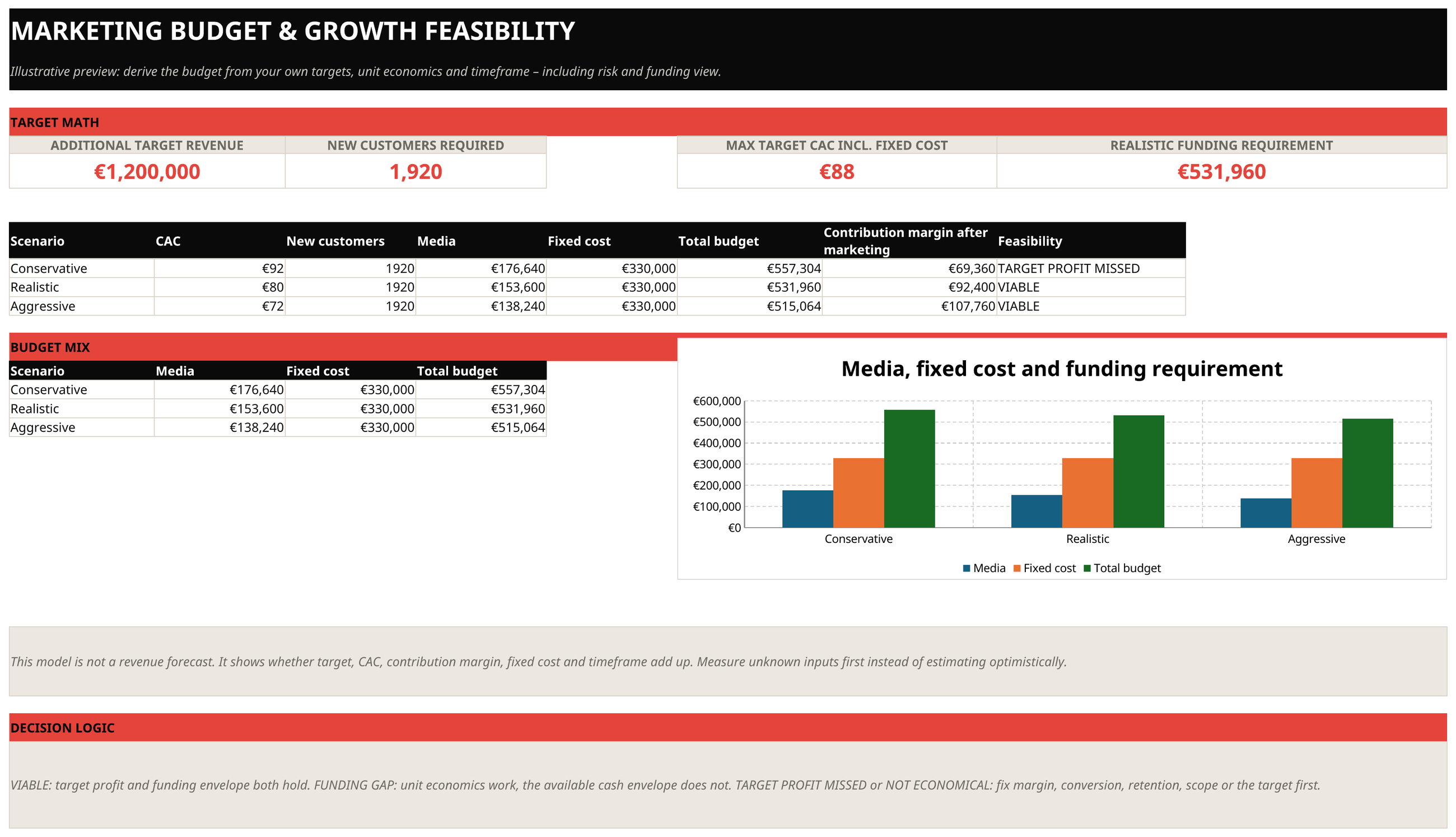
Marketing Budget Calculator & Growth Feasibility
Decision
Which budget your revenue target actually supports.
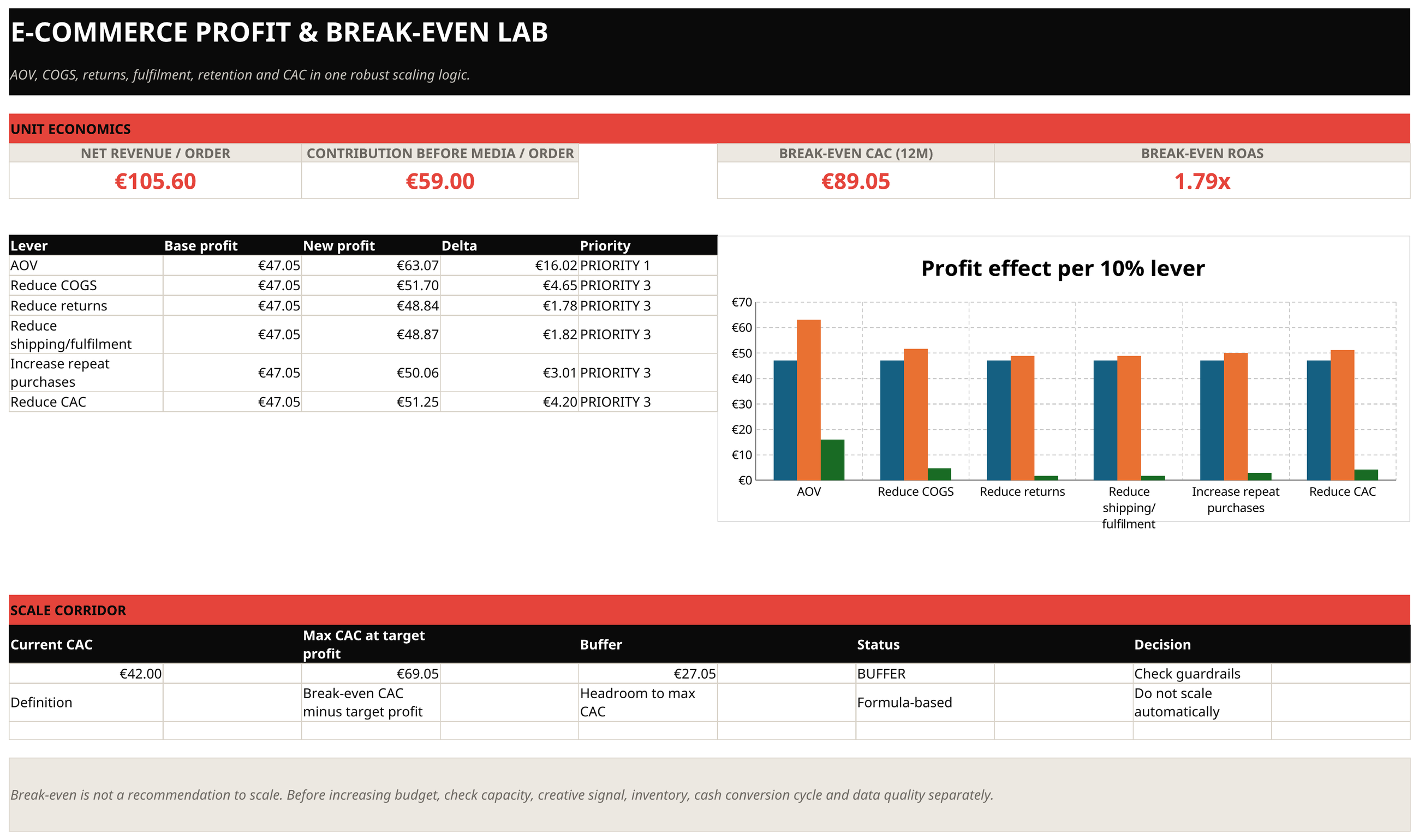
Preview from the workbook
Original view from the file – with example data, no client data.
Real unit economics, not list price: contribution margin after COGS, returns, fulfilment and payment – and the CAC headroom left to buy growth.
Decision
The CAC at which growth stays profitable.
If the tool exposes a leadership or ownership bottleneck: consider a bottleneck call.
The workbook computes first-order and 12-month contribution margin, derives break-even CAC and required ROAS, and shows how sensitive both are to returns and repeat rate.
Use it when
Before a paid-media budget increase or when margin falls while revenue grows.
Limits of this tool
Break-even is not an automatic recommendation to scale. Volume availability is out of scope.
The decision this tool clarifies
You know the CAC at which growth earns money instead of burning it.
The tool is enough when …
Marketing leadership makes sense when …
Budget & profit · XLSX
Decision
Which budget your revenue target actually supports.
Delivery & control · XLSX
Decision
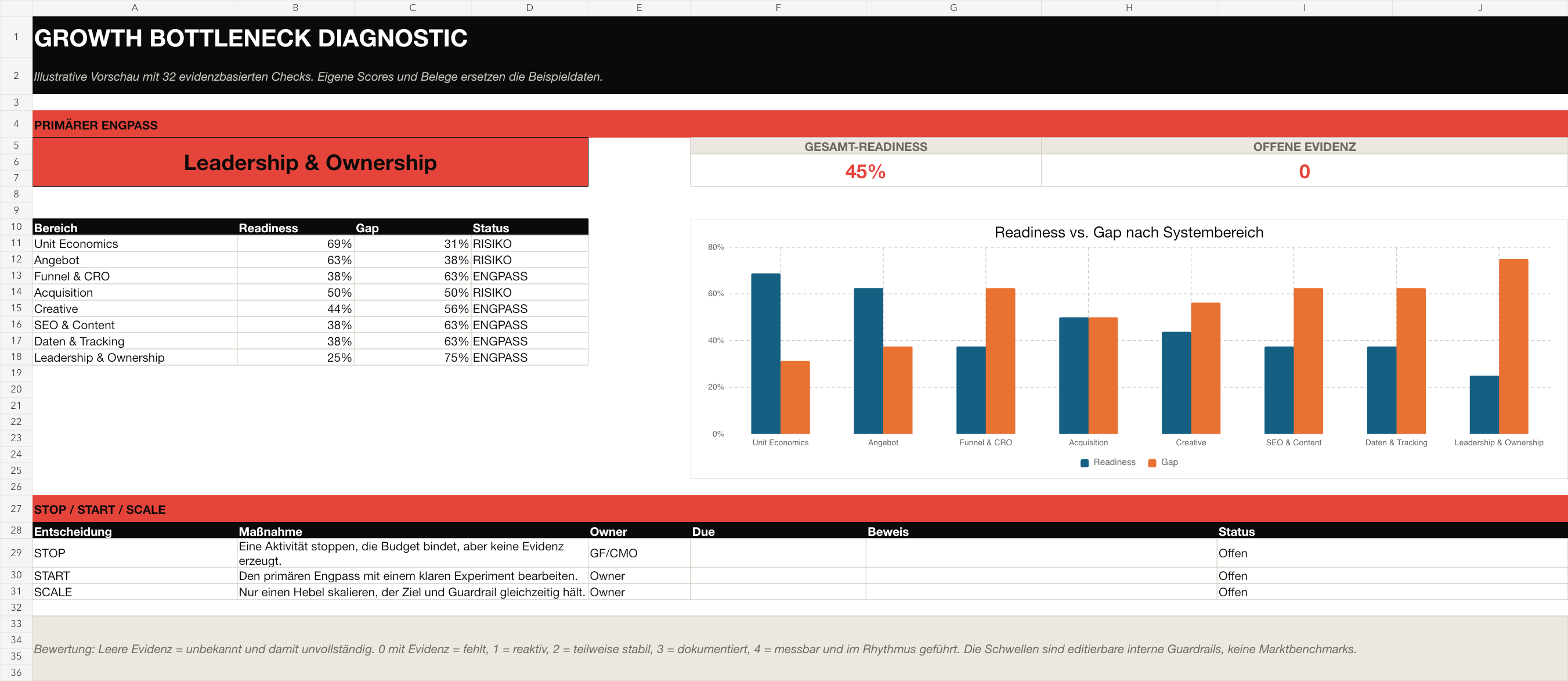
Which system is actually blocking growth.
Leadership & org · XLSX · DOCX
Decision
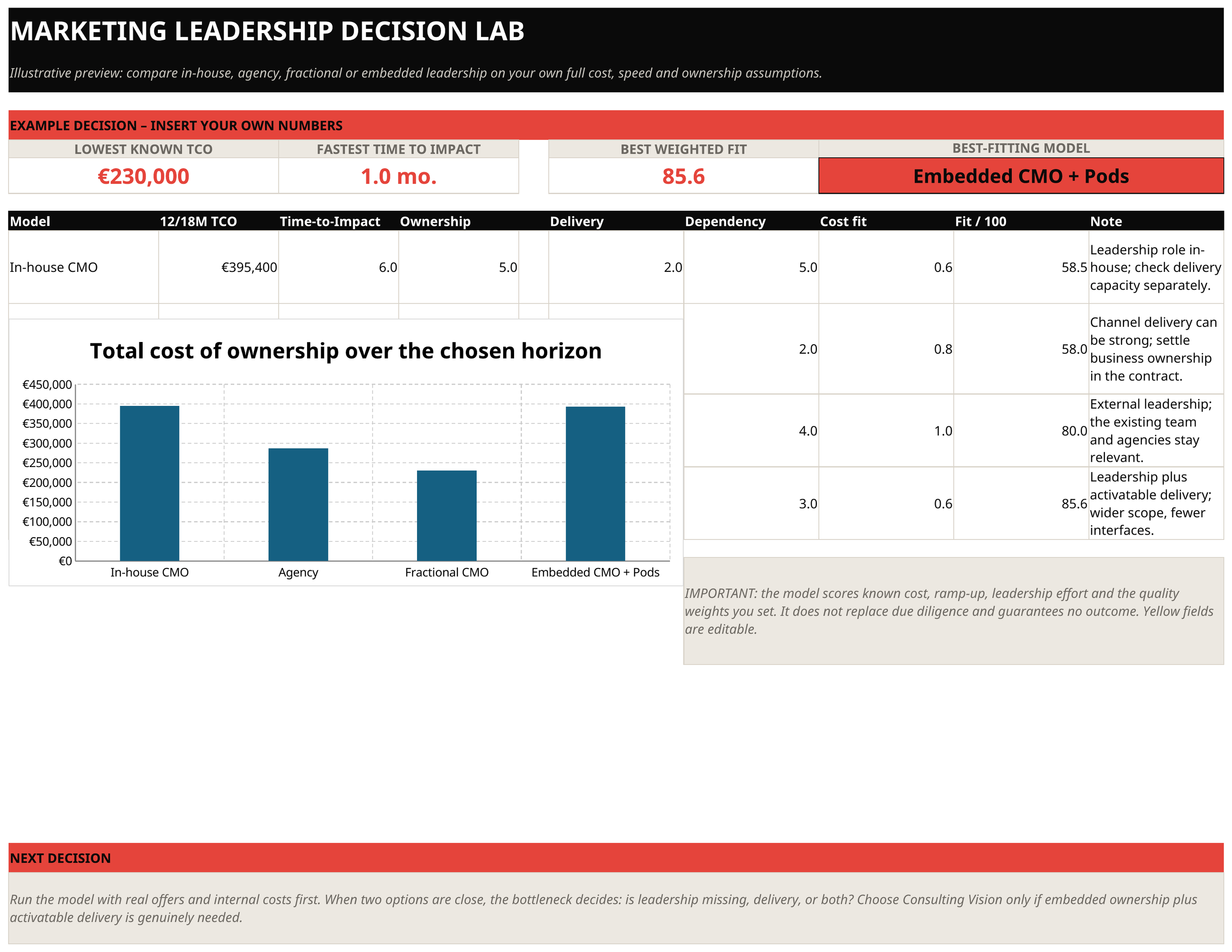
In-house, agency, fractional or embedded – on full cost.
Every tool is a working template with example data – no client data, no confidential figures.